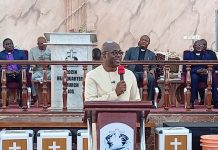
The presidential candidate of the Allied People’s Movement (APM), Engr. Seyi Makinde, has argued that Nigeria requires a fundamental reset of its political, economic and institutional structures, insisting that conventional reforms may no longer be sufficient to address the country’s deep-rooted challenges.
Makinde said the country could only achieve meaningful progress through a new approach to governance that prioritises the welfare of ordinary citizens, creates opportunities for young people and strengthens public institutions.
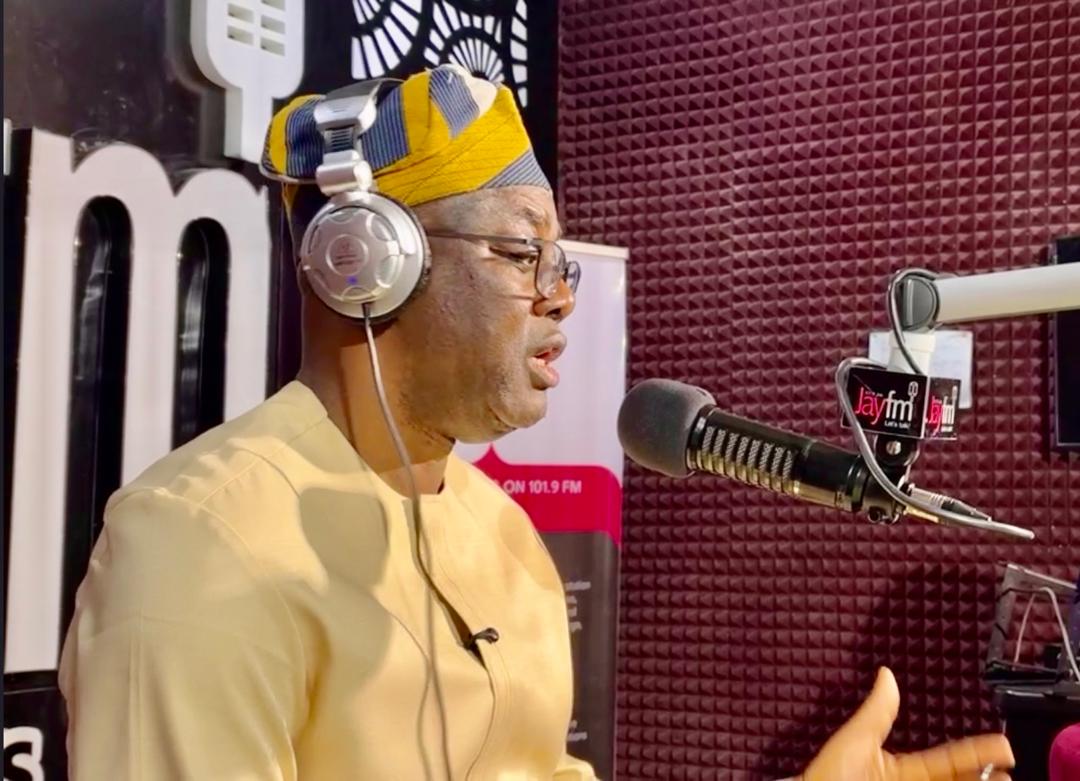
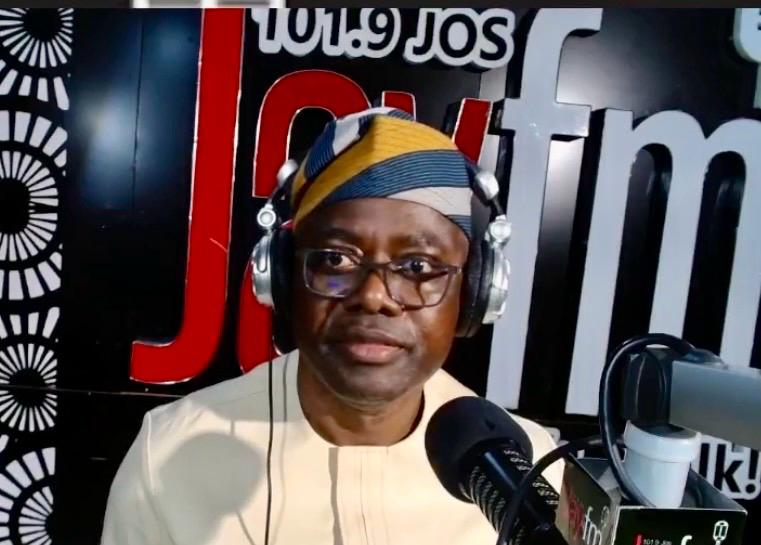
He made the position during an interview on Jay 101.9 FM with Ponsah Fanap on the topic, “Reset Nigeria: Making Nigeria Work for Every Nigerian,” monitored by Clusterchannel.
Explaining the philosophy behind his proposed reset agenda, Makinde said reforms were only effective when the positive elements within a system outweighed its shortcomings. He maintained that Nigeria’s current situation required a more fundamental intervention.
Using a computer system as an analogy, he explained that repeatedly adjusting a malfunctioning system would not solve its problems when a complete reboot was necessary.
Makinde, who recalled enjoying free education from secondary school through university, said his generation benefited from government policies that provided opportunities for ordinary Nigerians, lamenting that younger generations were increasingly losing access to such opportunities.
He identified the economy, security, education and the social-political environment as the four major pillars of his proposed reset agenda, stressing that economic performance should be measured by its impact on households rather than statistics alone.
“The economy must work for everybody. It is not about taking numbers out, saying external reserves have grown. What is the ordinary man on the street feeling? Are they able to feed themselves? If you can’t feel the impact that the economy is getting better at the street level, then the economy is not getting better,” he said.
On addressing poverty and unemployment, the APM candidate identified entrepreneurship, skills acquisition and intensive production as critical requirements for creating sustainable economic opportunities, particularly for young Nigerians.
He warned that failure to provide young people with a clear pathway to prosperity could worsen insecurity, arguing that criminality and social instability were partly linked to the absence of opportunities and declining confidence in the future.
On security, Makinde renewed his support for state police, recalling his role in advocating decentralised policing during the administration of former President Muhammadu Buhari and the subsequent establishment of Amotekun by South-West governors.
He acknowledged concerns that state police could be abused by some governors but argued that constitutional safeguards should address such fears rather than prevent willing states from establishing their own security structures.
“We don’t all have to set up state police at the same time. But let the opportunity exist. If you think you’re ready, you’ve ticked all the boxes and things like that, you should go ahead and secure your state,” he said.
On education, he called for stronger collaboration between federal and state governments, insisting that investment in education must be treated as a shared responsibility rather than an excuse for shifting blame.
Citing the resolution of the ownership dispute involving Ladoke Akintola University of Technology between Oyo and Osun states, he said political leaders could overcome longstanding institutional challenges through sincerity, cooperation and accountability.
Makinde also proposed changes to Nigeria’s political structure, arguing that the country’s presidential electoral system should require a winning candidate to secure at least 50 per cent of votes to ensure broader national support and discourage winner-takes-all politics.
He cited South Africa as an example of a country operating a multiparty presidential system with constitutional provisions that encourage political parties to build coalitions when no party secures the required majority.
The APM candidate further proposed a transitional government of national unity, stressing that the arrangement should serve the collective interest of Nigerians rather than individual political ambitions. He said he had excluded himself from benefiting from whatever arrangement might eventually emerge.