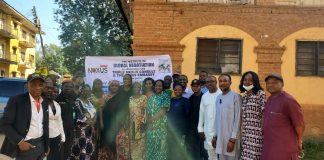
Native youths of Jos North Local Government Area, drawn from the Afizere, Anaguta, and Berom communities, have rejected the recent Plateau State High Court judgment recognizing a Hausa woman born and raised in Jos North as an indigene of the area, describing the decision as a threat to constitutional provisions on indigeneity and ancestral identity.
The youths, under the auspices of the Plateau Youth Council (Jos North Chapter), Afizere Youth Movement, Anaguta Youth Development and Cultural Association, and Berom Youth Movement, called on Jos North Local Government Council and the Plateau State Attorney General to urgently appeal the judgment and seek a stay of execution.
In a statement issued on Monday, the groups argued that while every Nigerian has the constitutional right to reside and conduct lawful activities anywhere in the country, indigeneity remains a matter of ancestral community membership and should not be determined solely by birth or residence.
“Birth in Jos North makes you a citizen and resident of Jos North. It does not, by itself, make you an indigene of Afizere, Anaguta, or Berom unless your paternal ancestry is from here.”
The youths maintained that the distinction between citizenship and indigeneity is clearly recognized by the Constitution and warned that blurring the line could create far-reaching consequences for federal character principles, traditional institutions, and community rights.
They also defended the use of Residential Certificates by Jos North Local Government Council, describing the document as an administrative tool for residents whose ancestral origins are outside the local government area.
According to them, if there were concerns about the implementation of the process, the remedy should be to improve the system rather than abolish the distinction between residents and indigenes.
“We are not fighting anyone. We are defending the Constitution. Nigerian citizenship gives you rights anywhere. Indigeneity for LGA benefits follows your father’s ancestral community.”
The controversy follows a June 9 judgment delivered by Justice C. Donglong of the Plateau State High Court in a suit filed by Fatima Baba Akawu and her father, Baba Alhaji Akawu, against Jos North Local Government Council.
The court ruled that Fatima Baba Akawu, who was born and raised in Jos North and whose father was recognized as a bona fide indigene of the area, was entitled to be issued a Certificate of Indigene.
Justice Donglong also held that issuing a Residential Certificate to the claimant instead of an indigene certificate amounted to discrimination and ordered the council to discontinue the practice of issuing Residential Certificates as substitutes for Certificates of Indigene.
Earlier, the Plateau Initiative for Development and Advancement of the Natives (PIDAN) had also rejected the judgment and vowed to pursue legal action, arguing that the ruling raises fundamental questions about ancestry, identity, and indigenous rights in Plateau State.
PIDAN maintained that indigeneity is historically tied to native communities and warned that redefining it through judicial interpretation could have implications beyond Jos North Local Government Area.
Amid the growing debate, the Plateau State Government has appealed for calm and restraint from all stakeholders.
In a statement signed by the Commissioner for Information and Communication, Joyce Lohya Ramnap, the government stressed that any party dissatisfied with the judgment has the constitutional right to seek redress through the appellate courts.
The government also cautioned against inflammatory comments capable of heightening tension, emphasizing that issues relating to indigeneship, citizenship, and residency rights are complex national questions that extend beyond Plateau State.