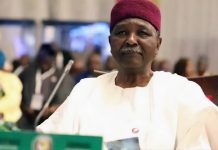
Former Head of State, Gen. Yakubu Gowon, has made a rare and emotional reflection on the Nigerian Civil War, admitting that with the benefit of hindsight, he would not have led the conflict that claimed millions of lives and reshaped the country’s history.
Gowon, who led Nigeria during the 1967–1970 civil war, described the conflict as the most heartbreaking chapter of his life, saying the experience left him with lasting lessons on leadership, peace and national unity.
“If I knew what I know now, I wouldn’t have led that war,” the former Head of State said.
The remark marks one of Gowon’s most candid public reflections on the civil war and has sparked fresh conversations on truth, reconciliation and national healing more than five decades after the guns fell silent.
While maintaining over the years that the war was fought to preserve Nigeria’s unity, Gowon’s latest admission suggests the human cost of the conflict continues to weigh heavily on him.
The war, which lasted 30 months, ended in January 1970 with Gowon’s famous declaration of “No victor, no vanquished,” a policy widely credited with preventing reprisals and laying the foundation for reconciliation and national reintegration.
Former President Goodluck Jonathan recently echoed that position during the presentation of Gowon’s autobiography, My Life of Duty and Allegiance, describing the declaration as one of the defining moments of Nigeria’s post-war history.
Jonathan also praised Gowon’s administration for establishing the National Youth Service Corps (NYSC), saying the scheme was designed to foster national unity by exposing young Nigerians to different cultures across the country.
He further identified Gowon’s role in the establishment of the Economic Community of West African States (ECOWAS), describing it as one of the administration’s enduring contributions to regional integration and cooperation.
In a related reconciliation effort, Plateau State Governor Caleb Mutfwang recently apologised to the Igbo community for the role played by Plateau people during the civil war.
“We were deceived into the war,” Mutfwang said, calling for forgiveness and urging both sides to embrace a future built on trust, dialogue and mutual respect.