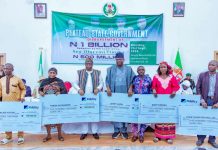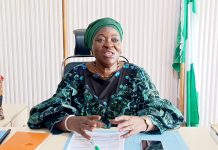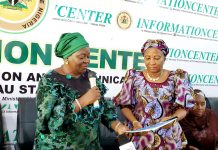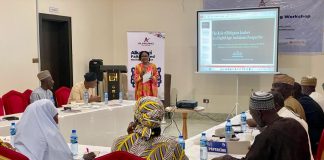
With Dr. (Mrs.) Kachollom Pyam Gang assuming responsibility for the newly established Plateau State Ministry of Humanitarian Affairs and Poverty Reduction, expectations are high on how her experience in education can be deployed to address the needs of vulnerable and crisis-affected communities across the state.
Her transition from the Ministry of Education to Humanitarian Affairs comes with experience in policy implementation, stakeholder engagement, human-capital development and coordination with institutions working to improve the welfare of citizens.
As Education Commissioner, Gang was involved in issues concerning students, teachers, parents and communities, including access to education, school safety, scholarships and peaceful coexistence.
That experience could prove valuable in her new assignment, particularly as the ministry begins the process of establishing structures for effective humanitarian response and poverty reduction.
One of the immediate priorities should be the welfare of communities affected by insecurity, particularly internally displaced persons (IDPs), returnees, women, children, persons with disabilities and households that have lost their homes or livelihoods.
For these communities, humanitarian intervention should go beyond the distribution of relief materials. There is a need for coordinated support in areas such as shelter, food security, healthcare, water and sanitation, education, psychosocial support and livelihood recovery.
A strong partnership with the Plateau State Emergency Management Agency (PLASEMA) will therefore be critical to the success of the new ministry. PLASEMA’s experience in emergency response and engagement with affected communities can provide an important foundation for identifying urgent needs and coordinating interventions.
The ministry could also work closely with PLASEMA to strengthen monitoring and evaluation, ensuring that humanitarian interventions are properly tracked from planning to implementation and that assistance reaches the intended beneficiaries.
Such collaboration would help the government identify gaps in ongoing interventions, assess the impact of programmes and develop evidence-based solutions for vulnerable people rather than relying solely on emergency responses.
The new ministry will also need strong partnerships with traditional institutions, local government authorities, civil society organisations, development partners, security agencies, women and youth groups and other relevant stakeholders.
For Gang, the assignment presents an opportunity to apply the people-centred approach gained from the education sector to a broader humanitarian agenda—one that places the dignity, safety and recovery of vulnerable citizens at its centre.
Beyond emergency relief, the ministry should pursue programmes that enable displaced and vulnerable persons to rebuild their lives through skills acquisition, agricultural support, entrepreneurship, education and other sustainable livelihood opportunities.
This is particularly important in communities where insecurity has disrupted farming, businesses, schooling and other sources of livelihood. Helping affected families regain economic independence will reduce prolonged dependence on humanitarian assistance.
The ministry must also ensure that humanitarian interventions are transparent, inclusive and responsive to the actual needs of beneficiaries. Regular monitoring, community feedback and impact assessment will be essential in building public confidence and improving service delivery.
With her background in education and human-capital development, Gang has an opportunity to make the new ministry a platform that does not only respond to crises but also supports recovery, resilience and poverty reduction.
Ultimately, the success of the new ministry will depend on how effectively it can bring government agencies such as PLASEMA and other partners together to provide timely solutions for IDPs and vulnerable communities.
For Gang, the new portfolio offers an opportunity to move Plateau’s humanitarian response from emergency relief to a coordinated system of recovery and resilience, ensuring that those affected by crisis are not only supported to survive but empowered to rebuild their lives.