The Conference of Autochthonous Ethnic Nationalities Community Development Association (CONAECDA) has expressed deep concern over the worsening security situation across Nigeria, warning that attacks and terrorism are spreading to more communities nationwide.
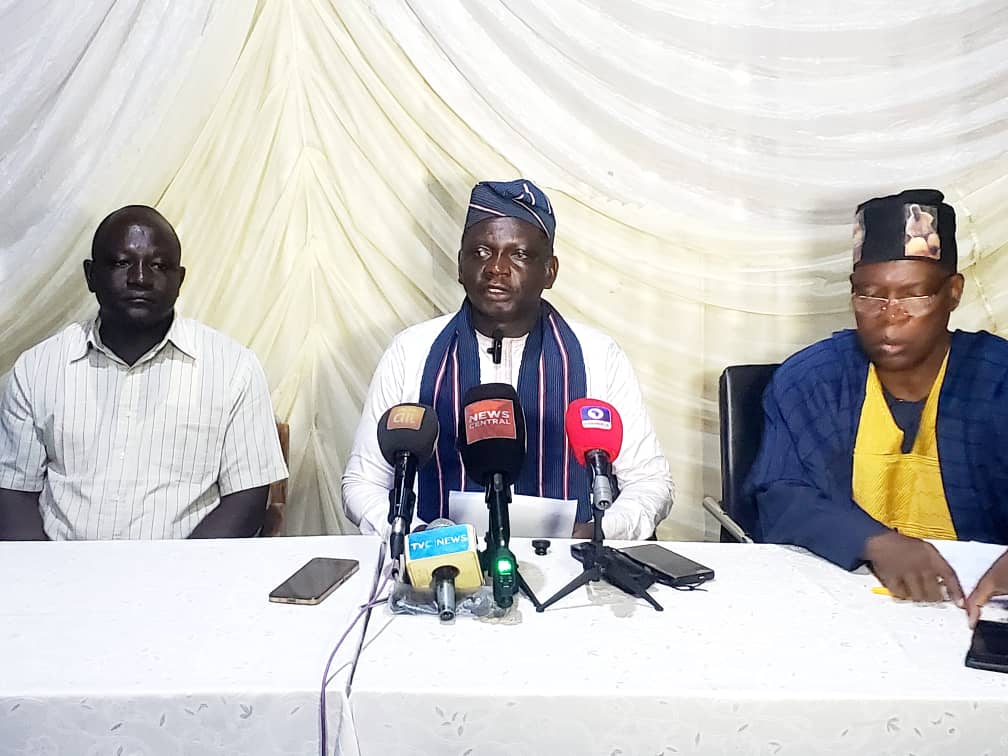
Speaking during a press conference held at Bishops Court in Jos, Plateau State, the Secretary-General of CONAECDA, Suleiman A.D. Sukukum, said the country was witnessing increasing violence in several states, including Niger, Zamfara, Benue, Nasarawa, Borno, Adamawa, Bauchi and Kaduna.
He noted that reports also indicated a growing influx of suspected armed elements into remote parts of the Federal Capital Territory, describing the development as a major security threat.
“Nothing is really new because the attacks continue in Benue, Plateau, Nasarawa, Taraba, Borno, Adamawa, Bauchi, Kaduna and many other states,” Sukukum said.
He further stated, “There is also a report of massive influx of herders into the southern and inaccessible parts of the FCT. This influx has serious security threats to the entire FCT.”
According to him, intelligence reports suggest that several grazing reserves across the country now allegedly host sleeper cells linked to terrorist groups.
“The killings of the second-in-command of ISWAP indicate the established place and importance of Nigeria in the global jihadist terror agenda,” he added.
CONAECDA also criticized narratives that attempt to justify violent attacks in parts of the country, insisting that such explanations only fuel hatred and embolden perpetrators.
Reacting to recent international concerns over attacks on Christians in Nigeria, Sukukum argued that dismissing the situation entirely was intellectually dishonest.
“It is important to state that such an excuse is lame and lacks intellectual integrity. Those responsible for genocide against Christians are terrorists and are also responsible for genocide against other sections of the Nigerian population,” he stated.
The association expressed concern over the continued debate surrounding the causes of violence in Plateau State following recent attacks in communities within the state.
Among issues raised during the conference were disputes surrounding indigene-settler relations, political inclusion, land ownership and native rights across Nigeria.
Sukukum maintained that native rights were historically recognized under colonial administrative structures through the establishment of native authorities, native lands and traditional institutions.
“When therefore the natives, that are the autochthons of Jos and Plateau, choose to defend their rights from being eroded because of what they see happening to native minorities in other places, they must not be victimized nor vilified,” he said.
The group further argued that only indigenous populations are entitled to indigene certificates issued by local governments and traditional institutions, stressing that the practice is not peculiar to Plateau State alone.
On political participation, CONAECDA acknowledged that the Nigerian Constitution grants all citizens the right to contest elections anywhere in the country, provided they earn the support of voters.
“Plateau has produced non-native political office holders and it remains the right of citizens to elect native or non-native. The President has no constitutional powers to force the choice of political office holder on any section of Nigeria,” Sukukum declared.
The association also condemned rural banditry, terrorism and attacks on communities across the country, while expressing solidarity with victims and security agencies battling insurgency.
CONAECDA called on President Bola Ahmed Tinubu to prioritize rehabilitation of victims, reconstruction of destroyed communities and the safe return of displaced persons.
The group equally raised concerns over alleged violations of religious freedom, including reported cases of forced conversion, abduction and marriage involving minors.
“We repeat our call for the establishment of a Religious Rights and Ethnicity Commission with powers to enforce religious rights across the federation,” Sukukum said.
As the 2027 general elections approach, the association warned against anti-democratic practices by political actors and urged political parties to ensure credible candidate selection and transparent electoral processes.