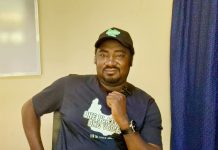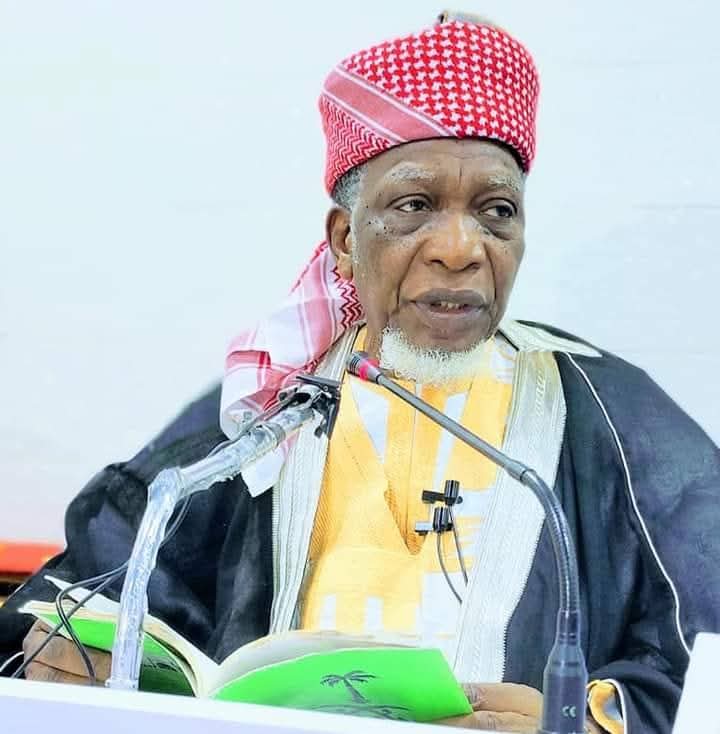
The Convener of One Plateau, One Voice, Dogo Nanzing, has described Sheikh Sani Yahaya Jingir as a settler in Plateau State and not an indigene of the state.
Nanzing made the assertion while appearing on the People’s Movement, hosted by Osama Apkunonu, where he responded to recent comments attributed to Jingir on the Muslim-Muslim presidential ticket and related political issues.
He accused the Islamic cleric of using religion to advance what he described as personal and political interests, insisting that Jingir does not speak for Muslims in Plateau State.
“Yahaya Jingir is not one of us. He is not from Plateau. He is a settler and a resident on the Plateau, but not an indigene,” Nanzing said.
According to him, the issue should not be viewed as a religious disagreement but as part of a wider debate on political interests, religious tolerance and the need for citizens to hold influential leaders accountable.
Nanzing also claimed that the cleric had become increasingly political in his public pronouncements, particularly on issues surrounding the Muslim-Muslim ticket.
He described Jingir as “self-centred,” alleging that the cleric’s interventions were often driven by personal interests rather than the collective interests of Muslims or Plateau residents.
“Yahaya Jingir is only speaking for himself, his family and his pocket. He is not speaking for Muslims, and even as a leader of an Islamic sect, he is not speaking for the entire Izala movement,” he alleged.
The One Plateau, One Voice coordinator further cited the reaction of the Jama’atu Nasril Islam (JNI) to Jingir’s recent comments, saying the organisation had distanced itself from a statement issued by an individual associated with its media structure in support of the cleric.
According to him, the development demonstrated that Jingir’s position should not be interpreted as the position of the wider Muslim community.
“JNI came out and disclaimed it completely. They distanced themselves from Jingir’s position. That tells you clearly that he is speaking for himself,” Nanzing said.
Nanzing also criticised political leaders and religious figures in Plateau for what he described as silence over controversial statements capable of creating religious and political tension.
He questioned why some leaders were reluctant to publicly challenge such pronouncements, alleging that political considerations and fear of losing votes could be responsible for their silence.
The group also commended Muslim and Christian youths who, according to Nanzing, had begun speaking against what they considered divisive religious narratives.
He called on religious leaders in Plateau to speak out whenever statements capable of threatening peaceful coexistence were made.
Nanzing further disclosed that One Plateau, One Voice was working on an anti-extremism bill which, he said, would seek to regulate extremist teachings in the state.
He urged the Plateau State Government and relevant stakeholders to consider measures that would prevent religious teachings capable of inciting hatred or division.
The interview followed recent controversy over comments attributed to Sheikh Jingir concerning the Muslim-Muslim ticket and the political direction of Nigeria.
Nanzing maintained that Plateau’s peace and unity should not be compromised for political or religious interests, urging citizens to remain vigilant and hold influential individuals accountable for their public statements.