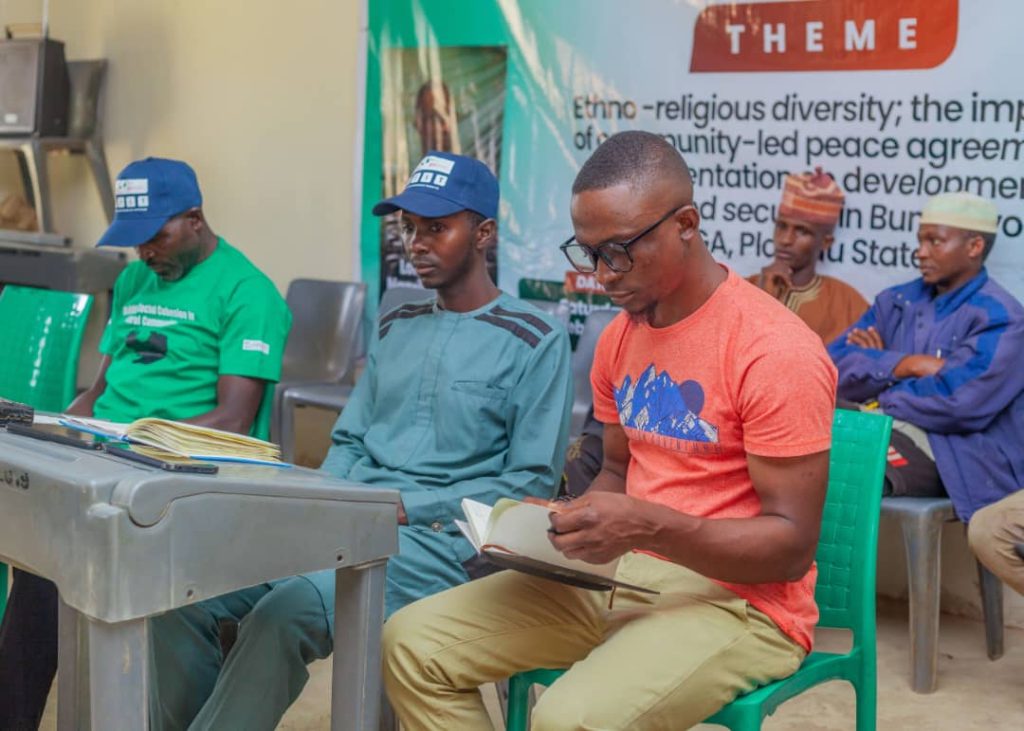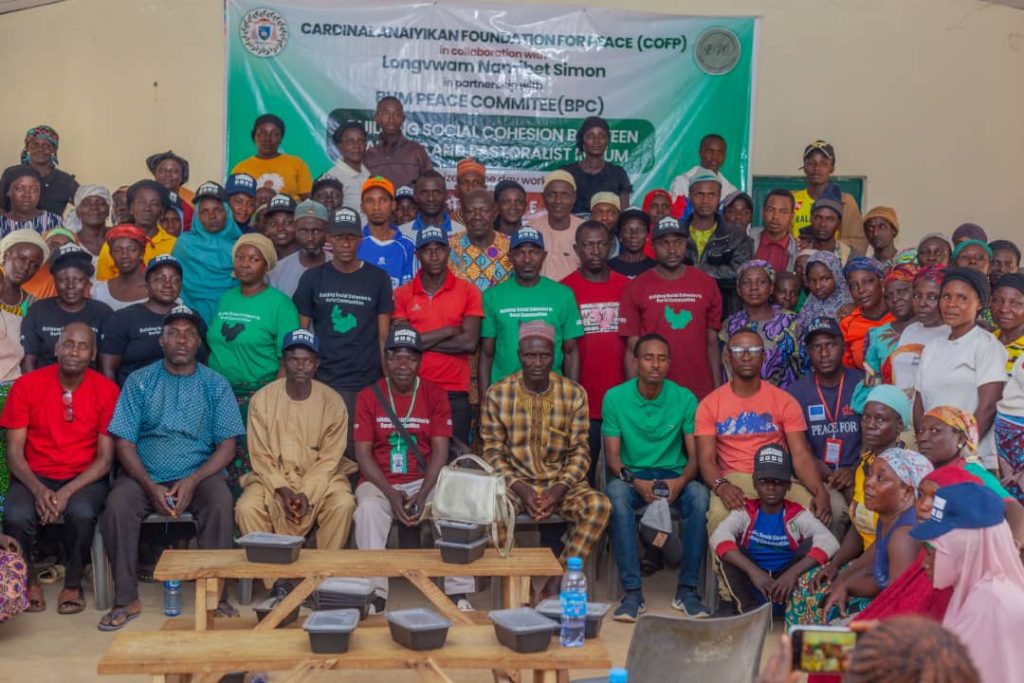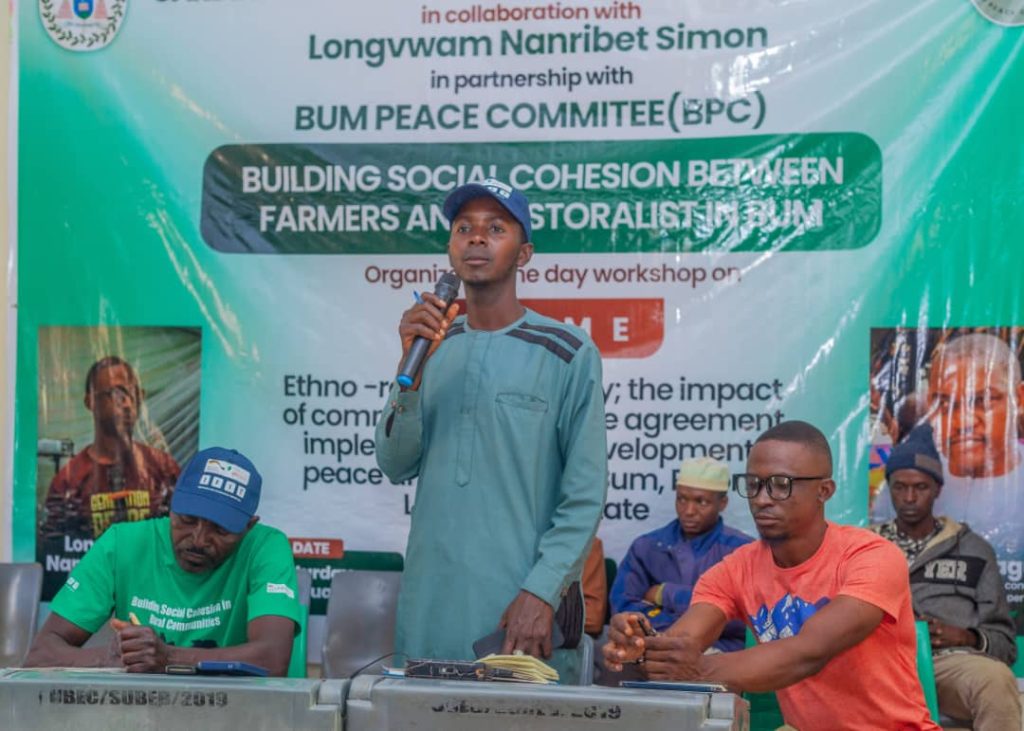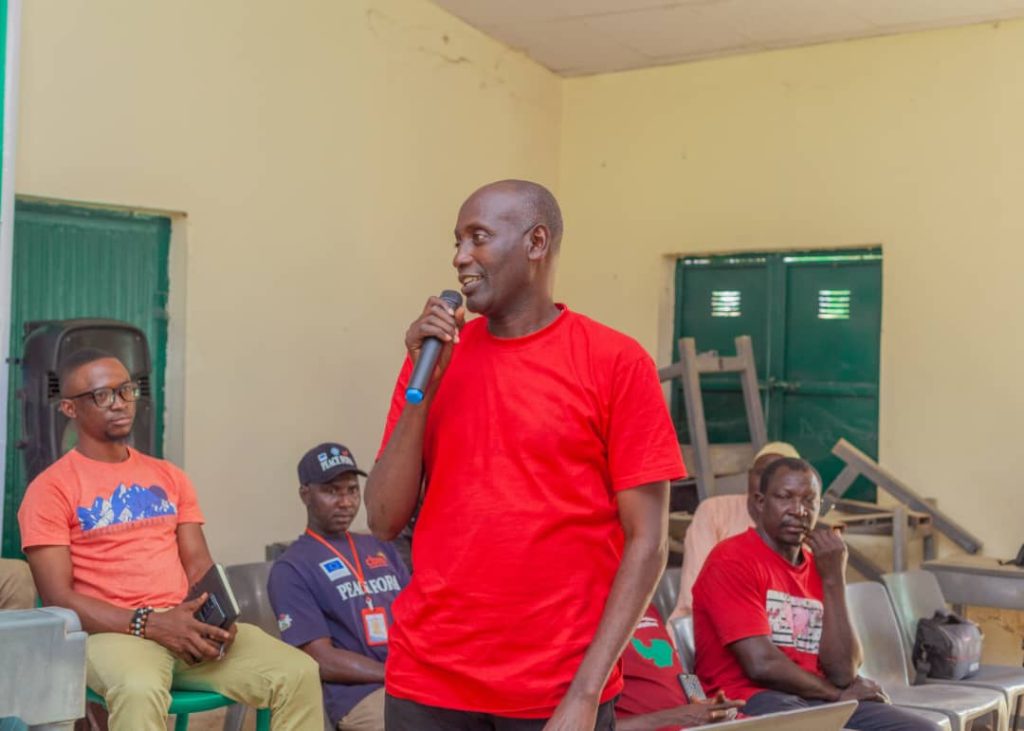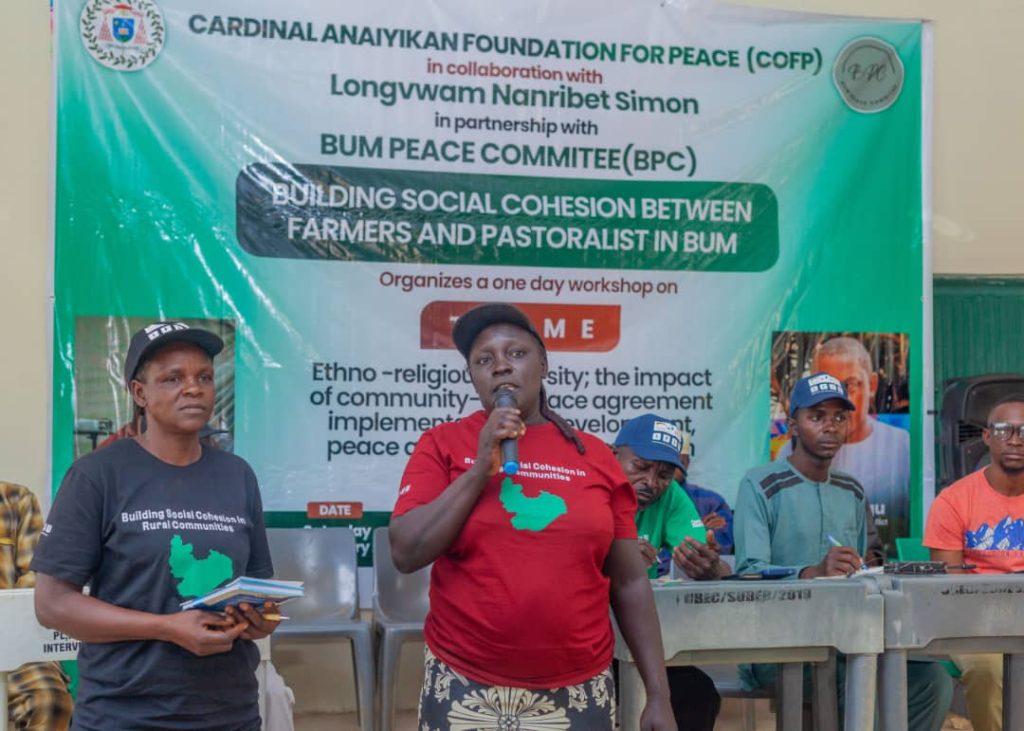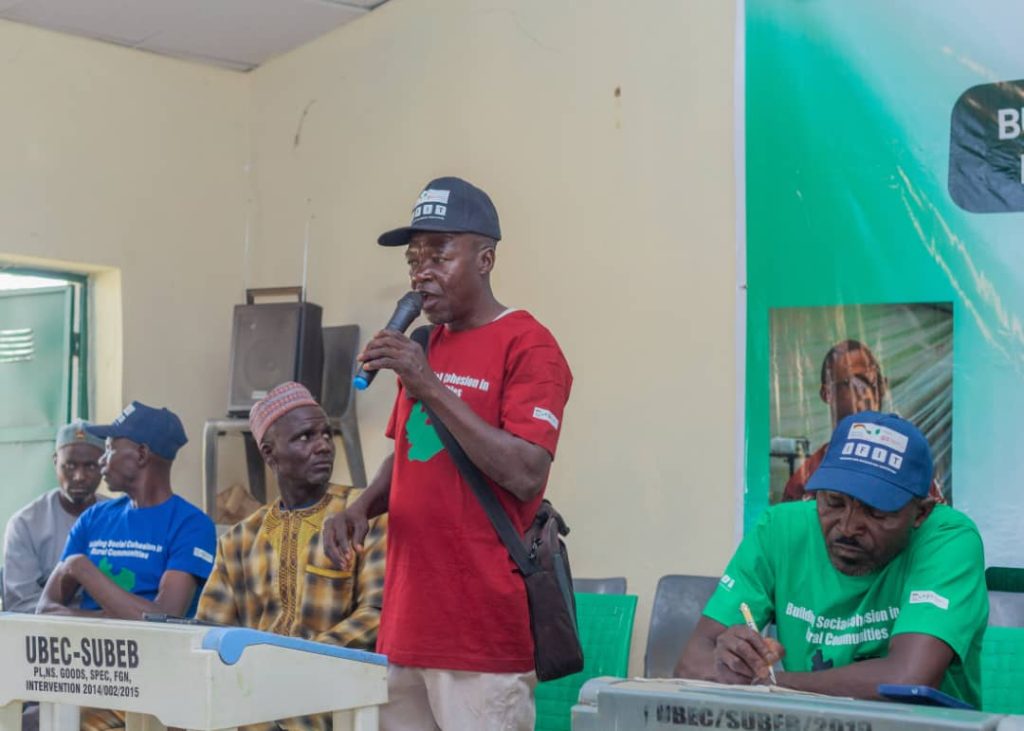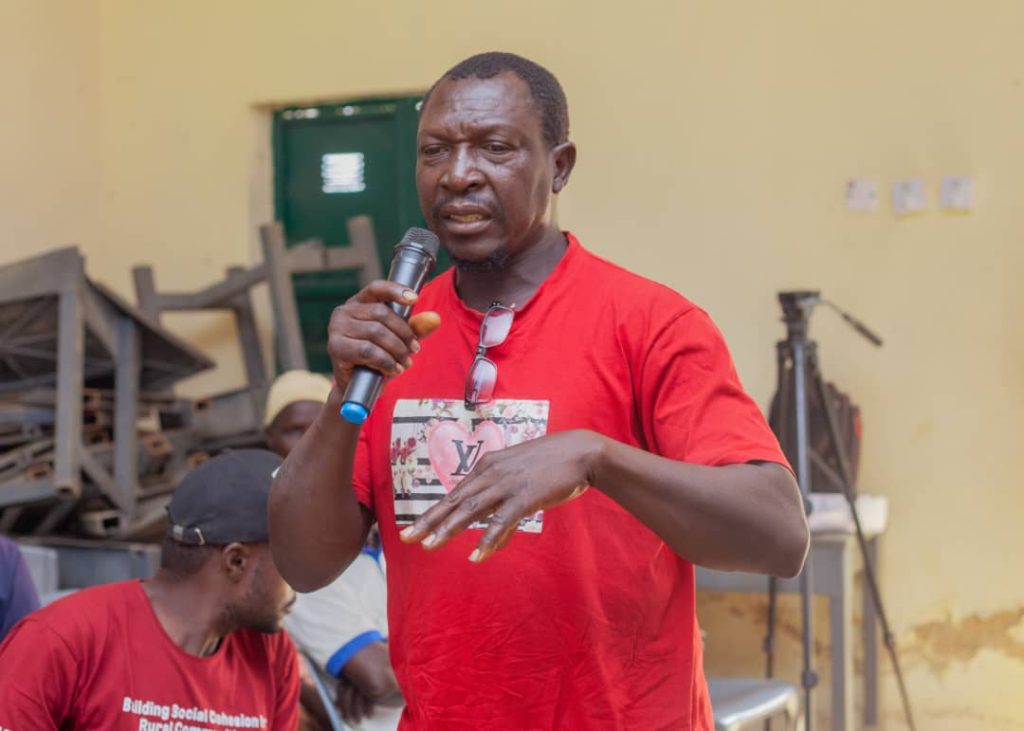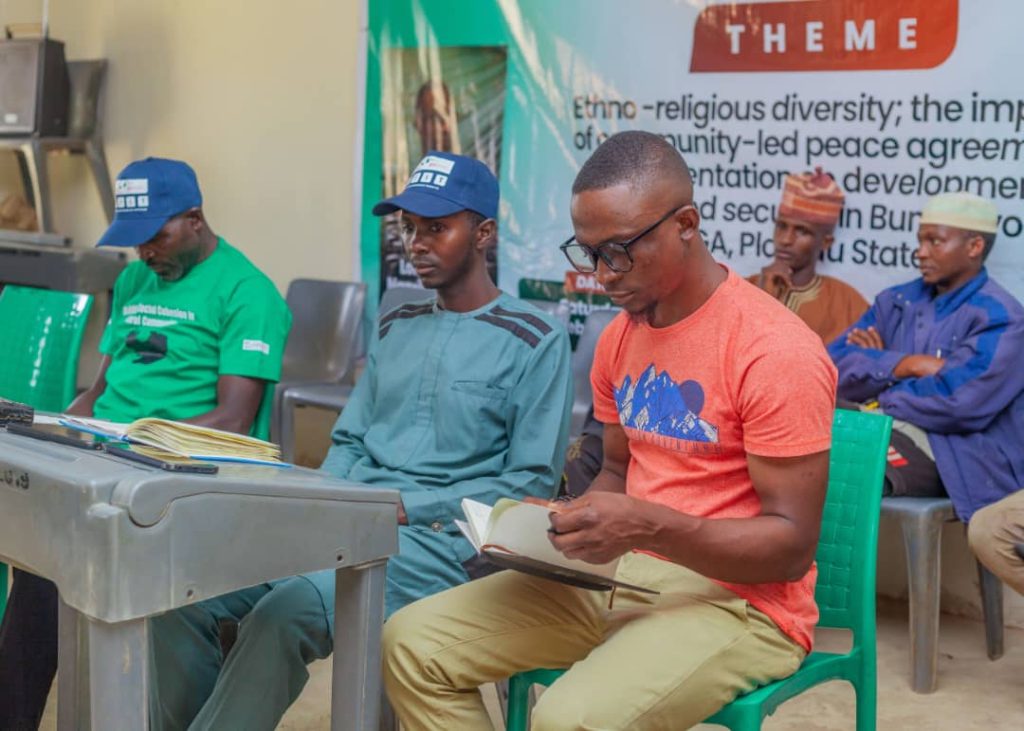
A renewed commitment to peace and coexistence was recorded in Bum community, Riyom Local Government Area of Plateau State, as farmers and pastoralists jointly adopted strategies to implement long-standing peace agreements aimed at ending decades of violent conflict.
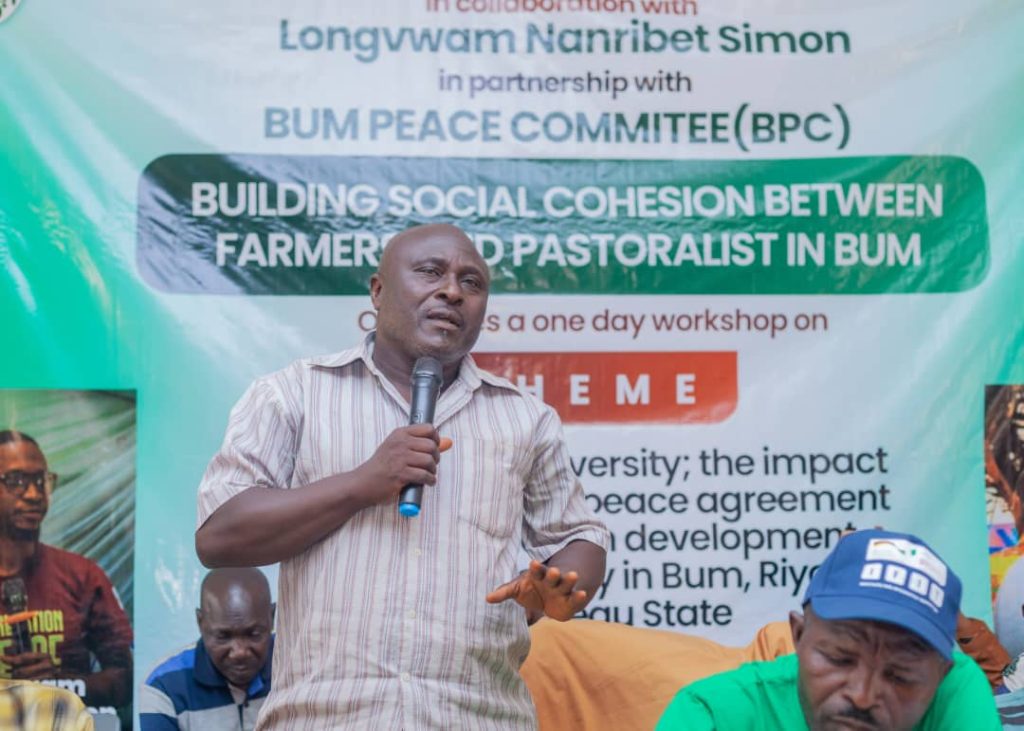
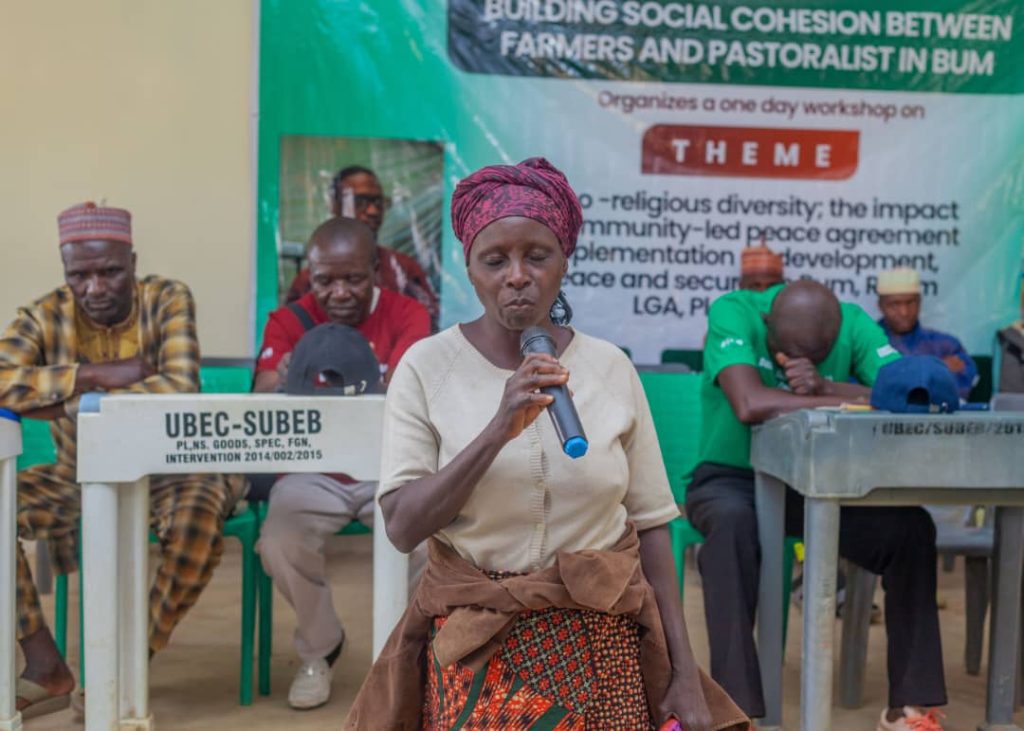
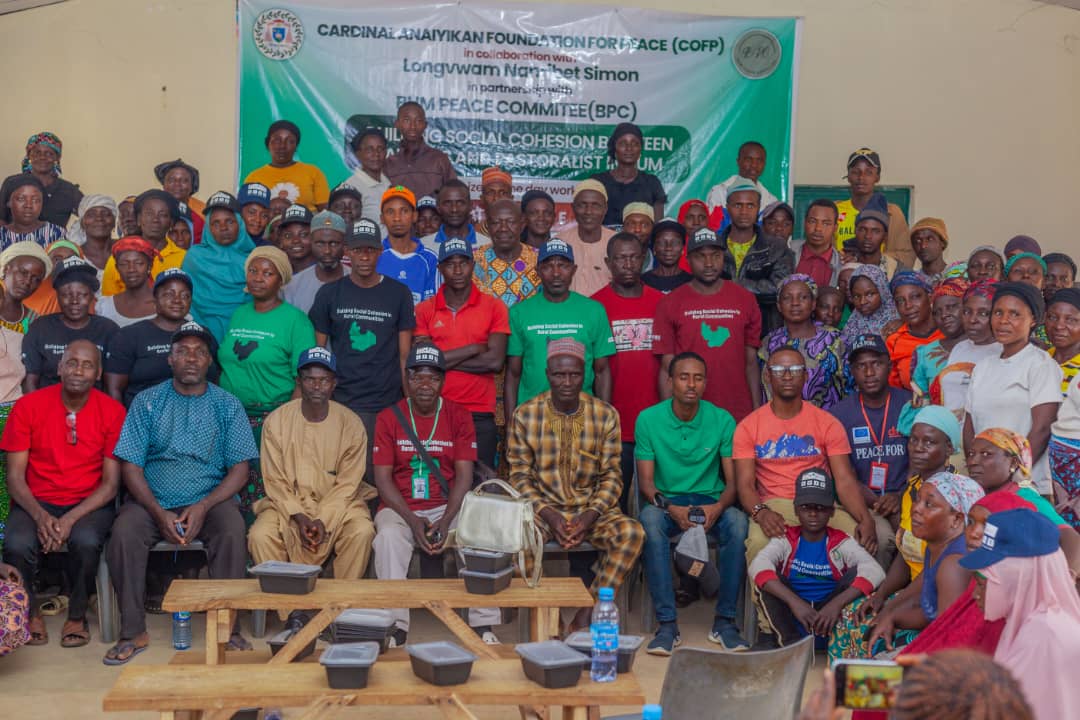
The Social Cohesion Workshop, held at Government Secondary School Bum, was facilitated by the Cardinal Onaiyekan Foundation for Peace (COFP) under the theme “Ethno-Religious Diversity: The Impact of Community-Led Peace Agreement Implementation on Development, Peace and Security in Bum.”
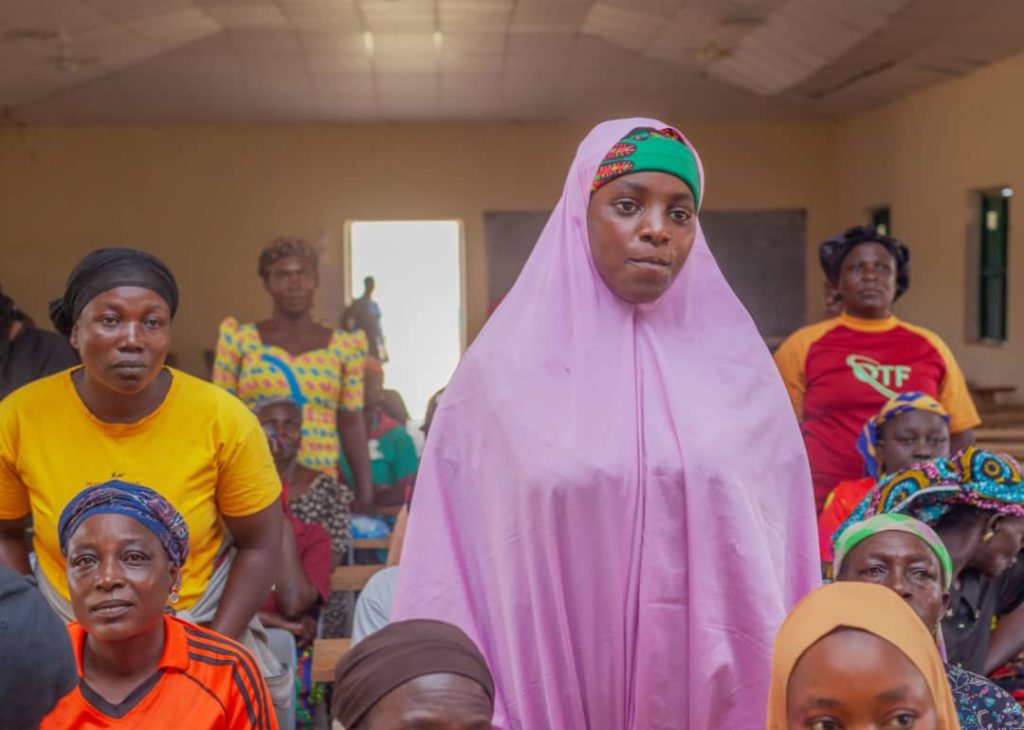
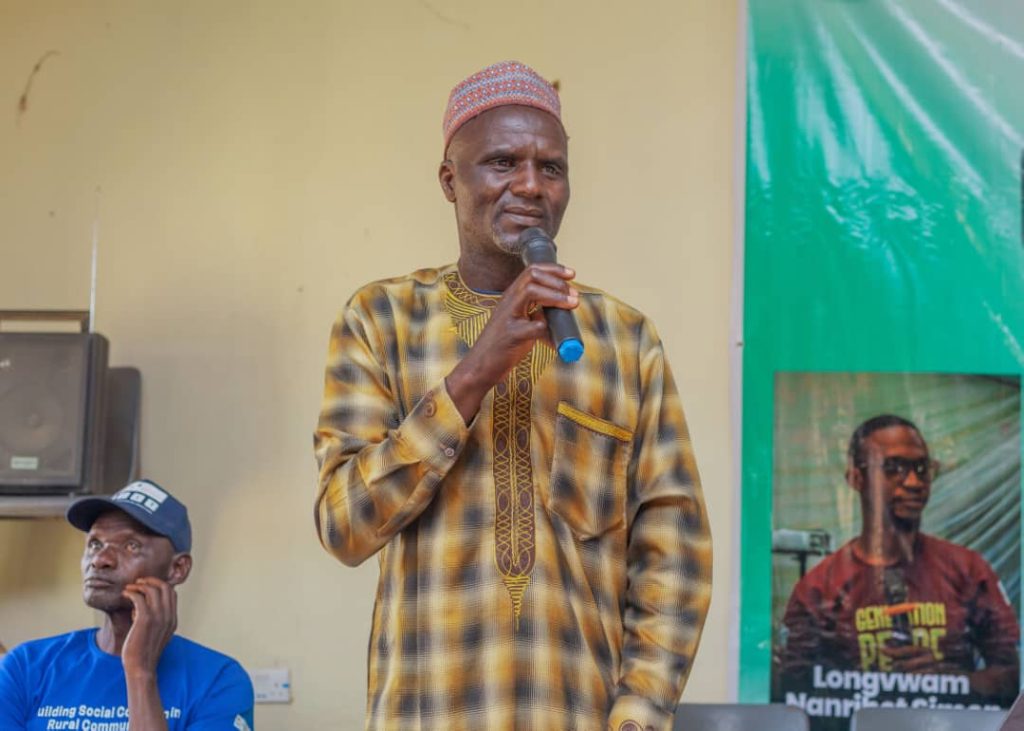
Participants at the engagement included farmers, pastoralists, traditional rulers, community leaders, women, youths, peace advocates, and members of the media, all of whom engaged in dialogue focused on rebuilding trust, strengthening social bonds, and restoring development in the conflict-affected community.
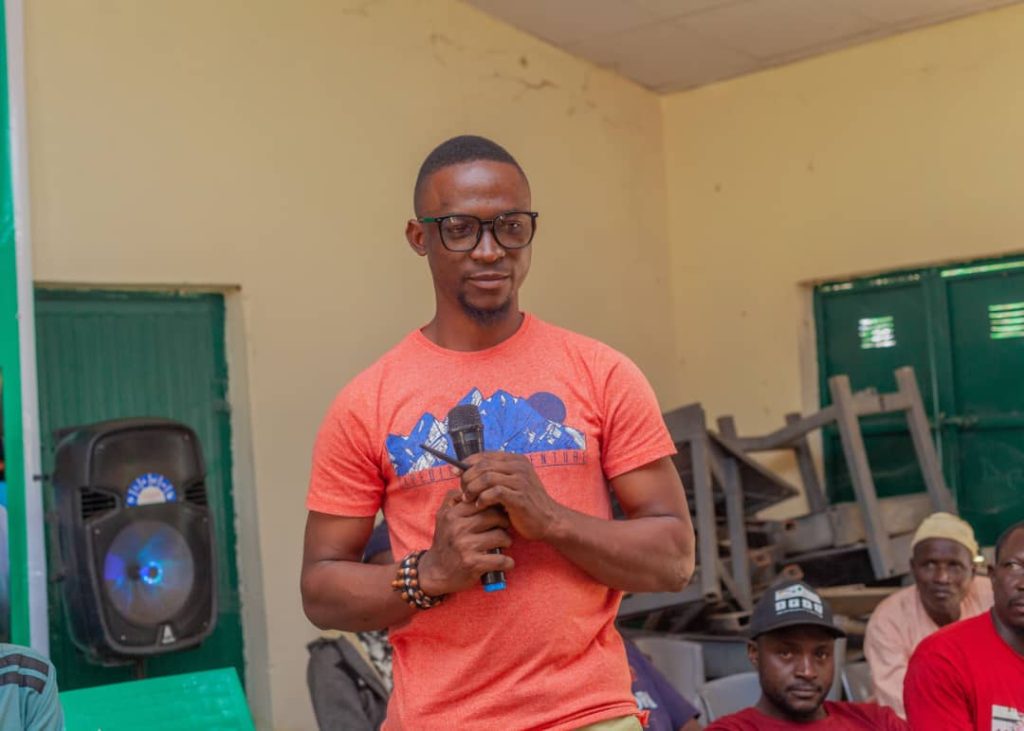
Speaking during the workshop, Amb. Nanribet Simon Longvwam, a 2025/2026 Fellow of COFP, described the gathering as a turning point for the community after over two decades of recurring violence that had claimed lives, destroyed livelihoods, and stalled development.
“What we witnessed here proves that peace is not only possible but it is achievable and sustainable when communities take ownership of the process,” Longvwam said.
He explained that the workshop created a safe and inclusive space that enabled stakeholders to jointly develop practical implementation strategies for eleven existing peace agreements, stressing that the agreements represent commitments to coexistence, mutual respect, protection of livelihoods, and shared responsibility for security.
Longvwam further highlighted the importance of inclusion, noting that women and youths—often the most affected by conflict—played active roles in shaping the implementation framework, while traditional and community leaders reaffirmed their responsibility as custodians of peace and moral authority.
According to him, the project theme underscores the reality that ethno-religious diversity is not a threat but a strength when properly managed, capable of fostering cooperation, innovation, and long-term social stability.
He added that the success of the initiative reflects the enduring vision of COFP and the legacy of John Onaiyekan, whose lifelong commitment to interfaith dialogue continues to inspire community-based peacebuilding efforts across Nigeria.
Calling for sustained commitment, Longvwam urged community leaders, youths, women, security agencies, local authorities, and the media to support and protect the peace process, emphasizing that the true measure of success lies in faithful implementation, accountability, and continuous dialogue.
Participants concluded the workshop with renewed optimism, expressing confidence that if the agreed strategies are diligently implemented, Bum community will transition from a history of violence to a future defined by reconciliation, cooperation, and shared prosperity.